Thermal mass: rediscovering Cyprus stone
Moving beyond aesthetic cladding, we reclaim local stone as a vital "thermal battery" for modern passive cooling strategies.
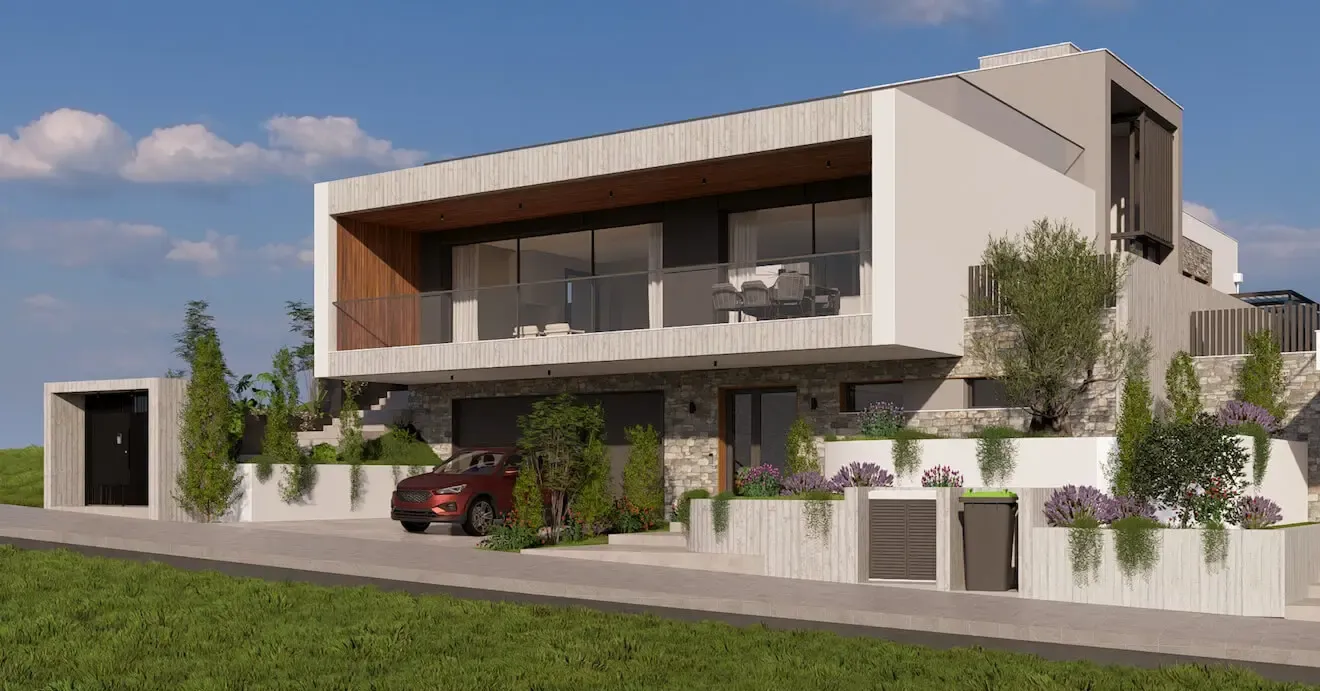
The Cooling Touch of History
If you have ever stepped inside a traditional village house in Lefkara or Omodos on a scorching mid-August afternoon, you know the feeling. The transition from the blinding Mediterranean sun to the interior is startling—not because of air conditioning, but because of the natural, crisp coolness of the air.
For decades, modern construction 🔗 in Cyprus chased rapid development using concrete and brick, often ignoring the wisdom embedded in our architectural heritage. However, as energy costs rise and sustainability becomes paramount, architects and homeowners are rediscovering local stone. It is not just an aesthetic choice; it is a masterclass in thermal mass.
Understanding Thermal Mass: The Physics
To understand why Cyprus stone is so effective, we must look beyond its texture and color to its density. Thermal mass is the ability of a material to absorb, store, and release heat energy.
Think of heavy stone walls as a "thermal battery."
- In Summer: The dense stone absorbs heat from the air and direct sunlight throughout the day. Because the stone is dense, the heat travels through it slowly (a process known as thermal lag). By the time the heat reaches the interior, it is often evening.
- In Winter: The stone absorbs heat from the low winter sun or internal heating systems. As the outside temperature 🔗 drops at night, the walls re-radiate that stored warmth back into the room.
Architect’s Note: Thermal mass is distinct from insulation. Insulation blocks the flow of heat, whereas thermal mass delays it. The most energy-efficient homes in Cyprus today combine both: external insulation to stop the heat, and internal stone to stabilize the temperature.
The Material: Why Cyprus Stone?
Geologically, Cyprus is rich in sedimentary rocks, particularly limestone and sandstone. These materials are not only abundant but perfectly suited for the Mediterranean climate.

1. High Density
The calcareous sandstone found in many regions of Cyprus is incredibly dense. This high density provides the substantial thermal inertia required to flatten out temperature spikes. A house built with this stone won't heat up immediately when the sun rises, nor will it freeze the moment the sun sets.
2. Humidity Regulation
Beyond temperature, natural stone is "breathable." It helps regulate indoor humidity levels, preventing the stuffy, dry atmosphere often found in buildings that rely heavily on mechanical air conditioning.
Modern Application: Merging Old and New
Rediscovering stone doesn't mean we must live in dark, small-windowed cottages. Contemporary Cypriot architecture 🔗 is finding innovative ways to utilize stone walls as internal functional features.
Here is how modern developments are utilizing this ancient material:
- Internal Feature Walls: Instead of covering stone with plasterboard, architects are leaving internal walls exposed. This allows the internal air to interact directly with the thermal mass of the stone.
- Flooring: Using local stone flooring works on the same principle, especially when paired with underfloor heating. The floor acts as a massive radiator in winter and a cool surface in summer.
- Hybrid Construction: Using a stone skin over a highly insulated core provides the rustic aesthetic of the village "spitiko" while meeting the stringent EU energy efficiency standards.
The Sustainable Choice
Using local Cyprus stone is a decision that extends beyond energy bills. It is a commitment to low-carbon construction.
Importing synthetic materials requires shipping and heavy processing. In contrast, local stone is quarried nearby, requiring minimal processing and zero shipping distance 🔗. It is durable, fire-resistant, and, at the end of the building's life, entirely biodegradable or reusable.
Conclusion
As we look toward a future of sustainable living in Cyprus, the answers aren't always found in high-tech gadgets or smart home systems. Sometimes, the most sophisticated technology is the one beneath our feet.
By reintegrating Cyprus stone into our modern designs, we aren't just preserving an aesthetic identity; we are utilizing a passive cooling system that has been field-tested for thousands of years.